Book Review: “13 Hours, The Inside Account Of What Really Happened In Benghazi” by Mitchell Zuckoff with Annex Security Team

This book is absolutely a quick read and probably the closest to true narration of the events that actually happened at Benghazi in 2012. Christopher Stevens (U.S. Ambassador to Libya), Sean Smith (U.S. Foreign Service Information Management Officer), Glen Doherty (Ex-Navy SEAL & security personnel) and Tyrone S. Woods (Ex-Navy SEAL & security personnel) lost their lives in the attack to the American diplomatic compound. In this conflict not only four Americans died but also more than hundred Libyans died.

13 Hours - Zuchoff

What saddens me about the whole incident is that this tragic event has been used for political plots in United States. As usual, the Democrats and the Republican stood by their party lines and the people who actually serve the country had to watch the politicians’ nasty political battle with their achy hearts.

This book is absolutely well written and very graphics in description. It keeps you very engaged.

November 21st, 2014

Chicago

Book Review: “Zealot: The Life and Times of Jesus of Nazareth” by Reza Aslan

Very courageous and yet informative book by Reza Aslan on Jesus Christ who definitely is one of the very few iconic figures who shaped the modern life in today’s world. His perspective as he claims definitely from a historical perspective not from a religious perspective. If it is an absolutely portrayal of history or not that probably need to be a different topic of discussion. I can see that how this may not be welcomed by different religious group but it is remarkable to see a different point of view discussion that is not recurrent regarding Jesus.

As per Merriam-Webster dictionary, Zealot means, “a person who has very strong feelings about something (such as religion or politics) and who wants other people to have those feelings”.

Zealot

If you were looking for religious answers, then is book is probably not the correct one but if you are a student of history, you will find this book very interesting. This is probably more of a book that raises new questions rather than responses to unanswered ones.

In any case, I think this a very courageous attempt from a Scholar who is Muslim. I have been reading his works or watching his TV interviews from his days in University of Iowa in early 2000s. I can see that he has evolved in last 10-12 years. He always was TV interview favorites by CNN or even some cases Fox. I can see that he definitely has refined his thought process and have become more organized in this book.

Anyway, if you agree with him or not, it is definitely an interesting read.

November 7th, 2014

Chicago

Book Review: “I am Malala” by Malala Yousafzai/Christina Lamb

What an outstanding bright young girl Malala is! A definitely admirable journey from Swat valley of Khyber Pakhtunkhwa, Pakistan to Oslo, Norway. Congratulations to her for this monumental achievement of perseverance, determination and ambition of human right.

My utmost respect to Malala Yousafzai and her father Ziauddin Yousafzai who encouraged Malala to be who she is today; she is a Nobel Peace Prize winner. What a significant contribution to hopes of every single Malalas from everywhere in the world.

I wonder what Bill Maher has to say about this after his blanket comment regarding Muslim countries. I wonder he would dare to ignore the achievements of Malala and Ziauddin. Within last ten year, few Nobel Peace Prize winners are Shirin Ebadi (2003), Mohamed ElBaradei (2005), Muhammad Yunus (2006), Tawakkol Karman (2011), Malala Yousafzai (2014). It would be interesting to see if Bill Maher can find anything in common within all these five people other than the fact that all of them won Nobel Peace Prize.

I-Am-Malala-Book-Review-1

Interesting discussion point is that some brought up the topic if the Noble Prize to Malala a Political reason or a true recognition. It does make me wonder as well what are the reasons sometimes Nobel Peace Prizes are given. Only thing I can think of is that Nobel Peace Prize is not only for what had already been accomplished but it is also intended for what are to be accomplished yet. An example is that Muhammad Yunus can help Grameen Bank more since he won Noble price.

A very interesting fact is that if you notice, 5 Muslims won Noble Peace Prize in last decade, overwhelmingly the majority from any particular religion. The reason solely can’t be any hidden politics. It is also that some Muslims are making some significant differences. The Muslims around the world should be proud of this. It is the liberal and educated side of Humanity!

Malala was a child (she still is one) when was shot in the face for going to school. No child deserved to be shot for any reason. Despite her struggle she continued to go to school. What a great example that is! Quran’s first word is “Ikra” for everyone for a reason; not only for men. Quran provides her right to be educated. She followed her right despite threats to her life.

It is her recognition for her perseverance and thrust for education, a prime fundamental right for everyone and commanded by the magical divine word “Ikra”.

Women are oppressed many parts of the world; not just in Muslim world but someone like Malala proves to us that it is possible overcome limitations that society brings to one in the misleading disguise of religion, culture and tradition.

In her book, Malala indicates the impacts of Ziauddin Yousafzai in her life. Ziauddin is a father, a teacher, an activist and a devoted Muslim. He is a father who fought to establish the rights for her own daughter. He is a father who fought to demonstrate the world the value of education. I am confident that Malala and Ziauddin hold the true essence of Islam.

Anyway, her book is a must read now, if it was not already by any chance.

October 10th, 2014

Chicago

Bridging the gaps

A talk at Iowa State University on technology, globalization and culture, covering topics of micro-credit, women education, using technology and education to eliminate poverty, story of economic recovery of Bangladesh, etc.

Sustainable Energies: US vs. European and other energy issues

//

Sustainable energies now a day casually referred as renewable sources of energies which exclude fossil fuels and nuclear fission. Sustainable or renewable energy essentially includes biofuels, biomass, geothermal, hydro power, solar power, tidal power, wave power, wind power and such.

Oil Economy

==========

US is the largest oil consumer of the world and heavily depends on oil. On the other hand, even Europe is big consumer of oil, they are not as depended as US is. This could be partially attributed to geographical location and public transportation system. For example, in Europe there are public transportation is available virtually any cities compared to in US public transportation is abundant only in bigger cities. There for there more car per capita in US than in Europe.

Oil Politics

==========

Us is still is depending on oil is largely due to “oil politics” at home and aboard that US takes part of. US is apparently making no significant movement to change it due to stakes the oil companies and it’s investors hold and often times lot of the stake holders of the oil companies are also in directly related to decision makers or the politicians. Many people in this country still speculate the relation between current vice president Dick Cheney and the oil company Halliburton [1].

Lack of interest in alternative energy

==========================

US is technological leader in many different products and commodities. US is the ultimate inventor of many different modern transportation.

Technologically it is not extremely challenging to have efficient electrical and other sustainable energy vehicle but US is not making any move for some reason.

Solar energy easily can be a big source in US but there is not big program to achieve this goal.

Strategic Interest

===============

US also may have strategic interest to stick with oil. US has strategic petroleum reserve (SPR) for the case of emergency [2].

National Economic Strength

====================

In general US’s national economic strength is much stronger than all the European countries. European countries started to look into alternative energy sources as a defense mechanism in order to economically sustain. On the contrary, may be US leadership thinks that US can ride out the oil crisis and does not need to look into alternative sources due to the strength of it’s economy.

There are so many problems with the US right now. We have built our entire country on petroleum products and we never really planned for the day when it wouldn’t be around any more. The problem is that we have so much invested in non-sustainable energies that a change to sustainable energies would take a herculean effort and a great deal of money.

Another huge problem is our political ties with oil. All of our politicians (including our president) get tons of money from big oil. Why don’t we have electric cars? So much of our country still relies on petroleum when it doesn’t need to.

The war in Iraq and many other problems can be related to our countries reliance on petroleum. If we are going to change quickly, it is going to take one heck of an innovation (wave energy). I think that the day the US stops relying on petroleum is the day that we run out of it.”

We need a “Plan B” for sources of energy before “Plan A” runs out. I absolutely agree with Michael that US needs to stop relying on petroleum and focus on sustainable energies. The first step towards this goal would be to realize the truth as a country. And, also make sure that our government realizes that time for “Plan B” is now, not later.

Off shore drilling could be great idea but why invest more money in a dead technology. Why not invest that money towards coming up with cars that can run entirely by electricity and/or solar power? Why not make steps towards where solar panels are standard for every house. It will be costly but it may be worthwhile to spend the money now on this than spend money on off shore drilling which essentially cost fortune to the US tax payers but ultimately oil companies would rip the profit.

Sources:

[1] http://en.wikipedia.org/wiki/Halliburton#Ties_with_U.S._Vice_President_Dick_Cheney

[2] http://en.wikipedia.org/wiki/Strategic_Petroleum_Reserve

[3] http://www.mvandersommen.com/models/images/sustainable.jpg

Date: October 3, 2008


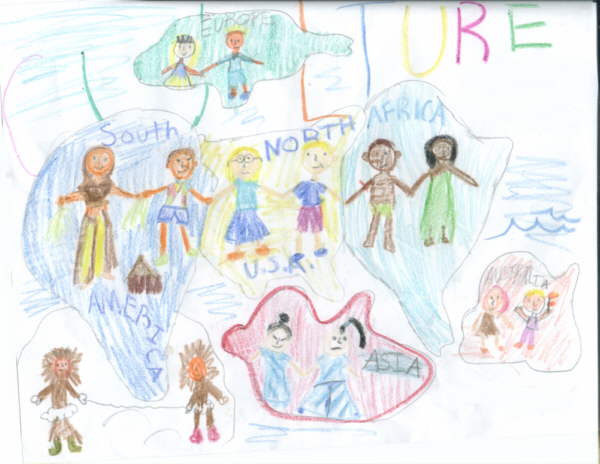
Culture and Globalization

//

Recently I had the opportunity to attend a live broadcast of the talk given the former NBA Player Paul Shirley who is an Iowa State alumni and ESPN sports writer now.

In this short article I will shed some lights based on his discussion about globalization. Globalization at the end of the day definitely creates some sort of competition. Now the burning question is whether competition unite cultures or rather drive them apart.

It is indeed an interesting experience to see globalization through the eyes of a basketball player when Paul Shirley presented his real life experience.

Paul Shirley mentioned when he was in Greece, he noticed local basketball players listened to folklore music which he was not accustomed with. He did not seem to connect to that type of music. Many could interpret this as that his experience indicates that globalization driving apart the culture. I personally do not agree with this.

I do not think globalization drive the cultures apart. Paul Shirley in the above example just did not connect to that particular type of music. That does not mean that he did not learn anything about that culture or did not like anything about it at all. He many not even like some music here in US. For example he may not like country music (which I do not know. Let’s just hypothetically say this). That does not mean that he does not like American culture.

I do not think by no means he said that globalization drives the cultures apart.

He did learn about overseas cultures (Greece and Easter Europe) and he wrote many blogs while he was those places. He learned what the differences are between American culture and the cultures that he had experienced. There are many things he may have liked and there are many things that he did not. This tells me that there was intra-culture communication. I think when there is intra-culture communication, that is a sign of uniting them.

Cultures are dynamic and very contagious. One culture always tends to learn from others. Japan is a greatest example now. Many Japanese could be more western cultured than many of us in Iowa. Many of the Japanese have cell phones, iphones, ipods, xbox and other western icons. Many of them know who Chris Brown or Hannah Montana is. I can not say for guarantee that in Iowa everyone as westernized as some of the Japanese.

So far, I have not focused on the topic of competition. Global competition reduces monopoly and that eventually helps majority of the global citizens.

I will bring Paul Shirley’s basketball experience here again. If he did not compete overseas, he may have been unemployed in US. So, global competitions indeed helped him. On the other hand, if Greece did not have players like Paul Shirley, they may not have enhanced their own skills in basketball to the level where they are now today. So, players like Paul Shirley have helped the Greece and other overseas basketball as well. Thus, it is a win-win situation for all in this example.

Therefore, I can conclude that competition created by globalization tends to unite cultures, not drive them apart.

One of the audiences of the lecture, Lauren H. commented, “There is so much we can learn about each other, and ourselves, through globalization. Of course there is always the point where we hold on to our own culture. It could be because we are insecure in our cultural beliefs that we cling so tightly”.

Indeed that is mainly problem that we so tightly cling tightly our culture believes because there is tremendous fear; fear of unknown somehow takes over.

Another colleague of the audiences, Jenna R., responded to my perspective by saying, “I agree with your perspective that globalization does not drive cultures apart, but eventually unites cultures which previously may have not been understanding of what each other are about. However, I do believe that there are times when cultures may conflict with the globalization effect and one or both countries are negatively affected. For example, as Americans we could be misunderstanding of Middle Eastern culture and them of us, so what are we both losing from the unwillingness to understand each other? How does it affect other cultures of the world? I believe it causes dislike and forces cultures to essentially choose support teams to combat other cultures, thus the cultures repel each other rather than attempting to understand and losing out on another perspective”.

I like Jenna’s example as it is very relevant to current events. There is a huge gap between American and Middle Eastern cultures. Partly due to ignorance on both sides and unwillingness to understand each other and also partly due to politics of power and oil. Differences in cultures, religions and race can drive people apart but when globalization takes place, these differences tend to smooth out after initial confrontations. One example is American-German relationship. Today in US, the phrase “Middle Eastern” sounds similar to the word “Germans” in 1940s even though events are different and the magnitudes are different (this may not be the case in rest of the world). Hopefully meaning to these terms eventually not be too hostile as the globalization makes us the better global citizens.

Zack K. elaborates on my opinion, “Most of the time, there is ignorance on both sides, and each side tends to generalize and put every one in the same group. A lot of times, people just assume that if a person is from one country, that they are exactly the same as a select group that may have given that nation/religion a bad reputation.

Personally, my family has had several foreign exchange students when I was younger and those were nothing but great experiences for my family and also helped us gain a different perspective on other nationalities. I think the only reason people struggle to understand other cultures is that they are “bull-headed” and not willing to try and understand other cultures.

In terms of globalization and business, I think that if people would be open to other perspectives and be more reasoning, it would improve the economy and help advances in technology move along at a much faster rate”.

Zach hit on two key phrases, “Economy” and “advances in technology”, “I [Zach] think that if people would be open to other perspectives and be more reasoning, it would improve the economy and help advances in technology move along at a much faster rate.”

The world has changed a lot in the recent years. The challenges of the twenty first century are totally different from the previous centuries. We can not be content with what we have right now and be too egger to just cling on it. We have to figure out ways to improve it constantly. We have to figure out what are the ways to make better economic growth and advance the technology.

Technology is a mean to improve economic growth. Advancement in technology almost directly represents economic growth.

The acronym ‘BRIC’ refers to Brazil, Russia, India and China, four major emerging economic giants who are under pressure to perform right now. If they do not, these regimes will collapse economically and poverty will take over almost two third of the world. As their solution to their problems, they have embraced “globalization” and they are indeed doing well. Just because in US, we are doing relatively better than those countries, we can not afford to avoid embracing “globalization”. It almost sounds like regardless whether globalization unites or divides cultures, we have to embrace it and compete with BRIC without being under pressure like them. US got the advantage, the head start.

Usually there is initial cultural resentment, which eventually gets replaced by acceptance and appreciation.

I think the initial resentment is due to fear of unknown. Most of those Iowa farmers have not been exposed to the global influences like this before in their personal life. Once they learned about it, they have discovered how this globalization can help them. Thus this incident of globalization is uniting Iowa (American) culture and Australian culture.


Date: September 4, 2008

Source of the picture: [1] http://www.patterson-smith.net/images/culture.jpg